
- 1. Understanding the Concept of a White Label in Digital Commerce
- 2. The Headless and API-First Approach
- 3. Strategic Mapping: Which Businesses Benefit Best from White Label Platforms?
- 4. Advantages of Using White-Label Architecture for E-Commerce Solutions
- 5. Key Technical Criteria of a Provider
- 6. Addressing the Architectural Trade-offs Associated with White-Label Platforms
- Conclusion: Securing the Horizon of Digital Commerce
In today’s cutthroat, ever-changing world of digital commerce, the ability to quickly create a brand, implement software, and offer more corporate services is often what separates market domination from irrelevance. If you are a full-service B2B digital agency who wants to offer premium products in a subscription form to generate a stream of profits for your retail clients, a venture-backed company trying to get traction in a new product line without spending 12 months on hardcore development, or an existing enterprise that aims to bring order into its global network of trading activities – you all face the same engineering challenge.
Creating a transactional software solution is not something that can be done overnight and easily. It takes large amounts of money, specialized software developers, and several months of working non-stop on database tuning, validating security architecture, and testing.
And this is the exact problem area that becomes an advantage when considering white-labeling as a solution to your business challenges. This article offers an in-depth overview of technical definition, infrastructure design, economic aspects, and best practices of white-label commerce solutions.
1. Understanding the Concept of a White Label in Digital Commerce
For the purpose of understanding the concept of white label e-commerce solutions, it would be extremely instructive for us to consider an example from the realm of physical retail manufacturing industry. As you stroll around any globally famous supermarket chain, there is no doubt that you will see several aisles stocked full of products under the name of the supermarket’s very own private retail label placed side-by-side to nationally famous products.
There is no such thing as a paper factory, organic coffee processing plant, or a consumer goods manufacturer working for the company. Rather, it forms an alliance with some top manufacturers of branded consumer goods who can mass-produce these goods without branding.
They procure the products, imprint the branding of the company to the packaging and boxes, and present it to customers.
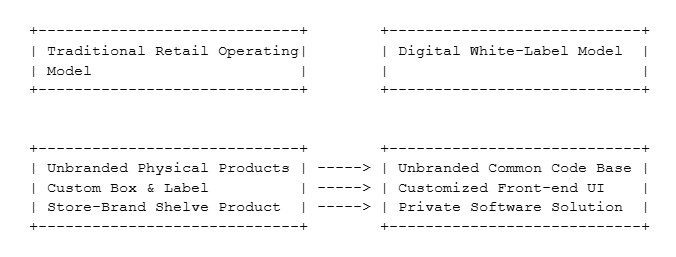
When considering the cloud computing environment of modern enterprises, a white-label commerce platform is basically using this same business model.
A white label commerce platform is a completely developed, extensively designed, and fully functional transaction application developed, maintained, and operated by a third-party independent software vendor. The ISV makes use of this fully functional product in licensing terms to other firms.
These licensees of the platform have full authority in removing all footnotes that would lead users back to the software vendor behind the product itself. The licensees then use their own corporate identities, branding designs, and private web domains for presenting the solution to their audience.
However, in the eyes of the consumer user, a corporate customer, or another B2B entity who logs into the storefront, the application becomes a proprietary solution created for your business by your own team of developers. Yet, behind the scenes, your business is utilizing a globally optimized, regularly upgraded, and shared cloud infrastructure which helps avoid risks inherent to any early stage of research and development.
2. The Headless and API-First Approach
In order to get a comprehensive understanding of why a system with a white label allows several different businesses to have their own unique brand environment on top of a uniform core codebase, we need to consider what modern cloud software looks like in terms of separation between design presentation and transaction processing.
Traditionally, older legacy systems of e-commerce have used a monolithic approach. Under this model, the frontend presentation layer (the actual interface) and the backend layer responsible for data storage (a database) have been connected to each other in one piece of code. Any changes that would be needed on the design level, for example, button placements and brand color schemes, meant changes within the database and the transaction process itself.
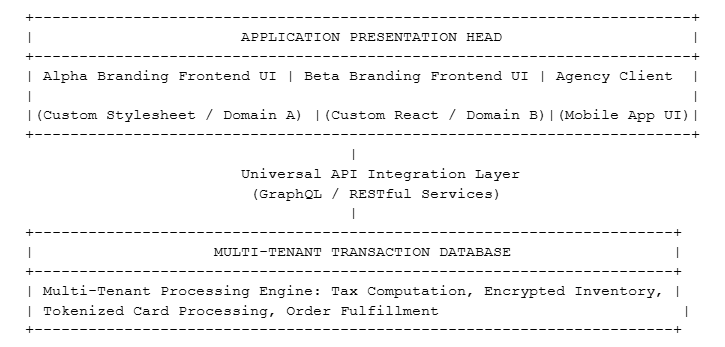
Contemporary white label platforms overcome such weaknesses by leveraging a headless commerce platform architecture powered by API-based integration. The improved technical design involves a proper separation of the digital commerce platform into two completely distinct layers.
The Centralized Processing Engine
The backend database will form the processing engine for all functions within the system. The engine will be responsible for carrying out tasks such as performing calculations for regional tax rates, tracking inventories in multiple locations, payment gateways transactions, customer record management, and automated delivery logistics.
This engine will operate within a secure cloud-based architecture where the processing is done without concern to aesthetics of branding. It is simply concerned with processing transactional data in a timely fashion.
The Decoupled Frontend Presentations
The frontend presentations refer to the presentation layer in the system architecture. Within an API-first approach, a white label solution means exposing all functionalities provided in the backend engine through APIs.
As a result of the clear communication protocols within the backend, developers have the ability to develop whatever kind of graphical experience over the technology. A developer can plug a desktop web app, native app, or wholesale purchasing bot directly into the common backend infrastructure.
When a buyer taps on the branded buy button within your frontend, a nice package of JSON information flows through the secure API to the backend, and the entire purchase is processed in milliseconds with success notification sent back. Such a structure enables the development team to make radical modifications to user interfaces, layouts, colors, and custom enterprise domain without even changing one line of transaction processing code.
3. Strategic Mapping: Which Businesses Benefit Best from White Label Platforms?
The versatility of contemporary white-label online commerce technologies enables them to become a useful tool for many different business models.
B2B Digital Marketing and Technology Agencies
There is a tendency among digital product, design, and marketing agencies to have project scope creep. Initially, a business client could engage an agency to develop a corporate brand identity, create engaging content, or even SEO services.
But with time, the business client usually demands an end-to-end ecommerce solution to help in launching products and sub-brands.
If an agency goes for creating a custom transaction engine for each client, they would need to employ costly database developers, cloud systems engineers, and security experts, which can cost the agency their profit margin and delay projects.
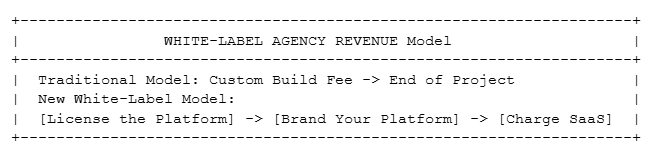
The agency will be able to incorporate a top-of-the-line storefront offering into their existing core portfolio offerings through licensing of the white label platform. The agency takes the platform technology, rebrands it as their own proprietary technology, designs it using their own agency standards, and rents it out to their corporate customers on a profitable monthly basis.
With this approach, the agency changes its commercial structure from that of an unpredictable and transactional payment structure into a highly predictable SaaS model.
Wholesale Distribution Firms and Large B2B Supplier Networks
Traditional business-to-business (B2B) manufacturing and industrial supply firms continue to operate by way of older methods when managing their customer accounts: paper-based catalogs, old-school desktop-based spreadsheets, and phone-based order entry. Bringing these extensive merchant networks online demands capabilities for complex, client-specific account terms, multiple discount tiers, and customized credit lines.
With a dedicated B2B white-label platform, a main distributor can create separate, individualized purchasing websites for each of their large corporate customers. For instance, a tier one auto parts manufacturer could launch custom e-commerce websites for every one of their retail distribution teams.
Each distribution team would log into a personalized website featuring their corporate colors, logos, and predetermined wholesale pricing catalogs. It saves time in the purchasing process, reduces the number of human errors made during data entry, and creates lasting supply partnerships simply by making digital loops.
FinTech Platforms, Neo-Banks, and Payment Aggregators
Financial technology companies and payment aggregators are always looking for ways to grow customer retention rates and increase the average revenue per user (ARPU). If a financial technology company is limited to providing basic merchant card processing services, then there is always a chance of their business being outdone by competitors that operate strictly on processing transaction fees.
A solution to retaining customers and increasing ARPU in the long-term is by embedding a custom white-label storefront builder into their fintech infrastructure. By doing this, business bank accounts and payment terminals could come with a built-in storefront builder under their brand name.
This approach generates a very sticky experience with the software that helps minimize churn and ties the processing payments revenue to the software itself.
4. Advantages of Using White-Label Architecture for E-Commerce Solutions
There are quite a number of advantages of using white-label solutions instead of internal development of software from scratch.
Superfast Time-to-Market
It takes several months of rigorous development work to develop, test, debug and deploy an enterprise-class solution that would support a business in terms of running its online operations efficiently. Developers need to allocate weeks to think about a sophisticated database schema, build a strong authentication system for users, develop a way to synchronize inventory on the fly and make sure caches can withstand traffic peaks during major sales periods.
Using a premium white-label solution makes all the previous work unnecessary since the core database architecture is already made, hardened and tested worldwide.
This results in businesses being able to launch their responsive storefront systems within weeks instead of quarters, thereby helping them take advantage of brief market windows before their less agile rivals.
Marked Savings on Initial Research & Development Expenses
From scratch software development involves considerable investment and unforeseen time periods. The initial cost for such a venture could spiral out of control rapidly as one needs to employ highly skilled backend programmers, frontend engineers, automated QA testers, and DevOps specialists.
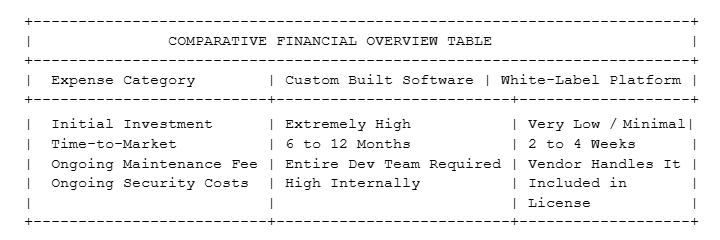
Apart from the development process, the maintenance costs that come with updating the operating system kernels, database software, and APIs can be costly for an enterprise’s budget.
Through the use of the white-label license model, the uncertain research and development budget costs are reduced to more predictable software licensing costs. In essence, this will help your financial teams save money for other important areas such as performance marketing, product acquisition, and customer acquisition.
Out-of-the-Box Enterprise Security & Global Compliances
Running a modern storefront network involves storing, transmitting, and processing user information, including names, addresses, phone numbers, and even their payment information. The transmission and storage of this kind of data is governed by many regulatory bodies, but particularly PCI-DSS.
PCI-DSS compliance is costly and difficult to achieve due to thorough infrastructure audits, constant penetration testing, and expensive network security software. PCI-DSS non-compliance results in hefty fines, legal responsibility for data breaches, and the inability to process any cards.
White label enterprise class platforms have all of their software infrastructure hosted on secure cloud platforms which go through regular third-party compliance reviews. The software provider takes care of the complicated job of ensuring data is encrypted, that payments are made using tokens, configuring sessions securely, and constantly monitor servers for any potential problems.
Taking advantage of this technology reduces your exposure to risk of non-compliance by leaps and bounds, allowing you to protect your reputation and prevent liability issues.
Elimination of Technical Debt and Software Obsolescence
Over time, the codebase ages and gets into technical debt. When neglected, the software can end up becoming vulnerable, slower, and inefficient.
When using a custom build by your own company, you need to allocate a major portion of the time your engineering team spends on writing maintenance code for fixing issues rather than implementing new customer features.
The first thing that is required to be performed in a white-label software arrangement is the maintenance of codes. This involves optimization of database queries, security of system, updating of software, and modernization of payment features.
All this makes sure that you don’t have to spend your time on infrastructure development but still get a robust online store that is reliable and scalable enough.
5. Key Technical Criteria of a Provider
All white-label software platforms cannot be treated equally. You need to do a thorough analysis of some technical criteria to be able to find out whether a particular software platform will be able to help you in scaling your operations in the future.
Completeness of API and Engineering Excellence for Headless Approach
The quality of headless commerce as a white-label solution entirely depends on the level of engineering in the API integration of the solution. If the platform provider offers restrictive endpoints, hidden loops, or locked-down data fields, your engineers won’t be able to create unique customer experience or custom layout.
When evaluating a platform, it’s crucial to make sure your technical lead goes through API documentation and SDK of the platform. Prefer those platforms that come with deeply nested yet fast-working GraphQL API and RESTful configurations.
It’s important that your engineers can access any data field, manipulate all components of customer interfaces, and add new modern framework for presentation.
Systems Integration and Data Synchronization
E-commerce is not an independent system, and it needs to work hand in hand with other parts of your organization in order to increase efficiency. It means your transaction engine should exchange information with your business management systems seamlessly.
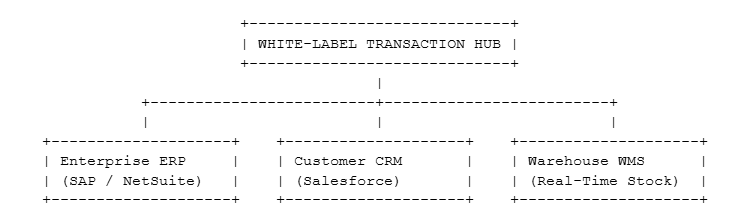
Ensure that your white label solution offers pre-existing connections or standard webhooks that allow smooth transfer of information to important enterprise applications, such as ERP platforms like SAP or NetSuite, CRM platforms like Salesforce, and WMS systems that track real-time stock levels.
Manual updates and outdated nightly batch file updates are inefficient and prone to error, leading to inaccuracies in your inventory levels. Consider solutions that facilitate real-time data flow.
Predictable Cost Scaling Profiles
Review the vendor’s license agreement to determine how much you will end up paying for the software over the years. Many vendors use a strategy of offering affordable entry-level fees while having extremely expensive scaling costs buried deep in their license agreements.
Such costs can include transaction fees based on sales volume, exorbitant tiered pricing for new administrative users, or overage fees for API calls during peak traffic times.
Work through the multi-year growth models to understand how licensing expenses will increase as the volume of transactions processed by your storefront, as well as the database traffic it generates, increases. Select a billing model that scales consistently along with your business metrics without cutting into your bottom line.
6. Addressing the Architectural Trade-offs Associated with White-Label Platforms
Although white-label platforms come with many advantages including fast development cycles, lower costs, and security improvements, there are certain architectural trade-offs associated with these solutions.
Dealing with Restrictions on the Back-end
Since white-label systems rely on a single core database architecture deployed across multiple independent corporate entities, you cannot simply log into the system and make changes to its core source code. In case you have a very particular business model that necessitates an abnormal transaction processing logic, database configuration, or payment workflow, implementing a generic white-label solution may not work.
The Solution: Work around these restrictions by taking full advantage of the inherent headless architecture of white-label platforms. Although you cannot customize the back-end, in a headless context, you can develop highly customized front-end logic and behaviors.
Implement your customized data routes, pricing logic, and custom visuals through the presentation layer and API connections to the back-end.
Managing the Risk of Provider Dependency
By developing your own custom software from scratch, you have full control over the source code and underlying infrastructure. In a white-label partnership, the success of your business relies heavily on the financial strength, security policies, and runtime reliability of your software provider.
In the case of outages or security vulnerabilities, your network of stores can be affected in terms of your business.
The Management Strategy: Guard the best interests of your organization by securing Service Level Agreements (SLAs) in your software agreements. Make sure your licensing agreement is well-drafted to include guaranteed uptime (99.99%), downtime penalties, disaster recovery plans, security patches within a specified timeframe, and total ownership of data.
Your software agreement should clearly stipulate that all customer data, orders, and products belong to you alone, giving you the liberty to export your data when switching to another system.
Conclusion: Securing the Horizon of Digital Commerce
Adopting a white-label e-commerce framework is not just a question of efficiency or saving money; rather, it is the key to unlocking the future of digital commerce on a global scale. Utilizing existing, dependable back-end systems enables firms to concentrate on customer attraction and retention, user experience enhancement, and market reach, rather than spending precious time and energy tinkering with code. For those with their eyes on the horizon, building a white-label system is not just another way to implement a product but an essential step towards remaining agile and scalable in today’s ever-changing environment.
The challenge that lies behind adopting modern architecture with full security over older technologies, including legacy storefronts, cannot be underestimated. It is precisely this challenge that Runtime Solutions helps brands overcome through their comprehensive services. Having been founded in 2010 and headquartered in Mumbai, with a global presence expanding to include offices in Kolkata, Nagpur, and Dubai, Runtime Solutions has been transforming digital landscapes for nearly 16 years. Working as a complete technology firm and a digital transformation partner, they focus on building out infrastructure for enterprise-scale customers.
Instead of having enterprises struggle through the complicated maze of payment isolation, cryptographic key management, and transaction tokenization, Runtime Solutions offers an integrated, turnkey solution architecture that is built specifically to meet the compliance and network scalability requirements of the business world today. From secure checkout forms and protected payment transaction mechanics to optimized vendor dashboard setups, they take all the burdens of compliance inherent in modern network communications and remove them from the equation.
With the help of years of experience in their product development capabilities and a cadre of innovation experts, enterprises can now build highly scalable backend commerce systems that integrate flawlessly into global payment standard directories. To find out more about how you can immediately revolutionize your retail architecture and unlock the potential for scalable digital commerce, visit the Runtime Solutions Official Platform and review the full set of engineering solutions offered in the Runtime Solutions Service Catalog.